

Naked
A lyrical exploration of how childhood shapes our capacity for closeness

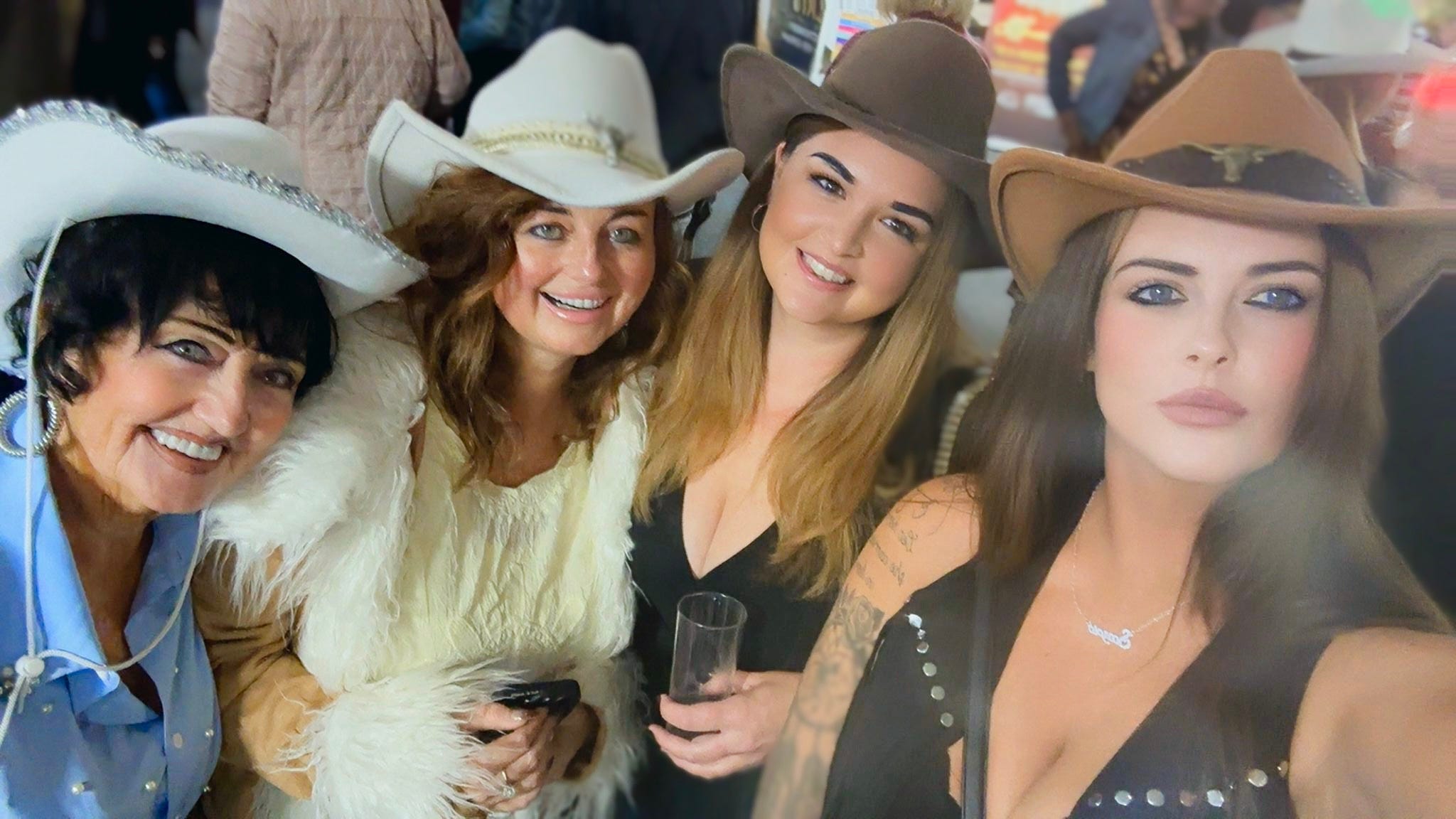
Three generations, one song, and our younger selves still standing with us
This is my fifteenth article in the Heartstrings and Headspace Lyrical Reflections feature series. Today, I consider the song Naked by The Shires. I recently went to see them in concert for the third time with my mum, my sister and a friend. Three generations standing together, all of us carrying our own private histories. You can stand shoulder to shoulder as grown women, but the younger versions of each of you are still there underneath, shaping the way you listen, the way you love, the way you protect yourselves. We even managed to let The Shires know how my sister had given birth to their music - another generation in the making.
What struck me that night is how music doesn’t just meet you where you are now. It meets every version of you that ever needed something.
Why I bring songs into the therapy room
As a Clinical Psychologist, I love using music in my therapy work, especially in groups. A song is often the safest way into a conversation someone has never been able to have. When I play “Naked,” the discussion always begins before anyone speaks. Clients sit a little straighter, or stare at the floor, or swallow hard when the opening line comes through the speaker. “Never let someone in.” For many of them, that is not a lyric. It is a life history. They grew up in homes where letting someone in meant giving them access to your softest parts, and soft parts were exactly what people stepped on.
The childhood armour that looks like independence
Clients often say they learned early to stay surface-level. They describe a childhood where their emotions were either too big for the adults around them or too inconvenient. So they built an armour system that looked like independence. They learned to offer connection in measured amounts so they could control the impact.
When the song continues, “Never got under my skin,” you see nods around the room. Not because they are proud of it, but because they recognise it. This is avoidant attachment in real life. Not the academic version. The lived version. Avoid connecting to emotions, avoid connecting to others beyond the superficial. Avoid giving people the power to hurt you again.
When the body runs even while the mind wants to stay
The next lyric, “Always running for the door when someone needed something more,” always lands the hardest. Clients don’t always run physically, though some do. More often they dissociate. They numb. They shut down. They overthink. They change the subject. They suddenly feel unbearably tired. Their bodies slip into a flight or shutdown response before they consciously register danger.
Someone in every group says, “It feels like my body is halfway gone before I even know what I’m doing.” And that is precisely what neuroception is. The body recognising threat before the mind has words. Except what the body is recognising is earlier danger, not necessarily the reality of the adult interaction they are having now.
The longing under the armour: wanting to show it all
There is always a shift in the room when the chorus arrives. “When I’m with you, I’m not afraid to show it all.” That line pulls something honest to the surface. Clients rarely say this out loud, but the longing is enormous. They want that. They want someone who quiets the alarm bells. Someone who stays long enough for their guard to relax. Someone who doesn’t need the rehearsed version of them. In therapy, this is the heart of the relational work. Teaching the nervous system, slowly and gently, that not all closeness leads to pain.
Emotional nakedness: the thin ice feeling
When the lyrics move into “I let you see inside, who I am under these clothes,” this is usually when clients shift in their seats. The metaphor moves from physical nakedness to emotional nakedness, and this is where the thin ice feeling begins. They talk about how revealing themselves feels like a risk of rupture. A risk of being too much. A risk of being left.
“Every scar, all of my flaws,” is literal. They fear that someone will see their anger, their anxiety, their trauma responses, their shutdowns, the parts they are still ashamed of, and walk away. They fear someone will see the younger version of themselves and reject them the way they were once rejected.
The belief that hidden parts are unlovable
In group, we talk about how trauma creates an internal belief that the parts you hide are unlovable. So when someone tries to see inside, the body reacts as if it is under attack. Clients tell me, “I want to let people in, but I feel sick when they get close,” or “I freeze when someone asks about my feelings.” This isn’t personality. This is physiology. The amygdala firing. The vagus nerve bracing. The inner child preparing for criticism or abandonment.
Running as a lifelong survival strategy
The lyric “And I’ve been hurt, and run before,” feels like someone naming their entire relational blueprint. They did run. They ran emotionally. They ran cognitively. They ran by shutting down, by becoming invisible, by working harder. Running became protection. Running became survival. Running became identity.
The terrifying and beautiful idea of being fully known
Then the song moves into the kind of vulnerability clients want but fear: “You get the best, the worst. You’ve seen all of my heart.” Many trauma survivors have never known a relationship where all parts of them were welcome. The strong part, yes. The competent part, always. But the sad part. The overwhelmed part. The confused part. The needy part. The human part. Not so much.
When they hear this lyric, they imagine what it would be like to be fully known and not lose the person in the process.
Automatic hiding: the nervous system in protection mode
What always softens the room is hearing, “When I’m with you, I’m not hiding anymore.” Clients describe hiding as automatic. Reflexive. “I don’t even know I’m doing it,” they tell me. And that is the point. These strategies formed before language. Before memory. Before choice.
We talk about masking. About attachment behaviours learned in childhood. About how being the easy one, the strong one, the quiet one, the competent one was the safest role available.
Music as the bridge between old wounds and new understanding
As we weave the lyrics through the nervous system, attachment, and inner child work, something shifts. Clients begin to understand that their fear of being known is not because they are too much. It is because they were once too alone.
Music becomes a bridge. It lets them talk without collapsing. Feel without drowning. Recognise themselves without shame. It lets them imagine a relational future where they do not have to hide.
And this is why I use music in therapy, especially in group work. Because a song like “Naked” does not just speak to clients. It speaks for them. It names what they have never had the safety to name. It holds the truth gently enough for them to touch it. And when the last note fades, they often begin talking in a way they have never been able to before.
You were never meant to carry the weight of someone else’s actions in your bones.
Whether it was a partner, a parent, a friend, or even your own younger self who had to survive what should have been safe, betrayal leaves a bruise on the soul.
In 2026, I’m opening sacred space for those ready to step out of the story of betrayal and into something deeper: truth, repair, and return.
We’ll gather in the Scottish Highlands among lochs, firelight, and fierce tenderness, to release what you were made to hold, and remember who you were before the rupture.
This isn’t just healing. It’s retrieval.
If your heart whispered “yes” as you read this, you’re invited.
🜂 Register your interest now and be the first to receive the early details when doors open. Click the image below to find out more and let the wilderness hold what the world tried to silence.

If you would like more help on rewriting your script and are open to working at all energetic levels (physical, mental, emotional and spiritual) check out my Shamanic Scripting programme that integrates evidence-based psychology with spiritual healing practices. Click the image below to find out more:

If you don’t want to commit to a subscription consider buying me a coffee to help me help others in my work.
If you would like to know more about the links between trauma and expanded consciousness, I invite you to subscribe to my relatively new blog Consciousness Corner by clicking the image below: I recently presented at Oxford University on this topic. My Presentation slides can be explored if you click here

If you would like to know more about Attention Deficit Hyperactivity Disorder (ADHD) I invite you to subscribe to my relatively new blog Wired to Wonder by clicking the image below:

To continue to reconnect with your body more and remain mindful and present see if any of these online courses from Rewire Trauma Therapy resonate with you:
Paid subscribers see my code below for 50% off courses over $240 dollars.
Somatic Therapy Programme Link
Expressive Arts For Trauma Healing Programme Link
Healing Trauma-Based Addiction Programme
Healing Trauma Through Sound And Music Programme Link
Nutrition For Trauma ProgrammeLink
Healing Trauma-Based Eating Disorders Programme Link
Trauma-Informed Yoga Programme Link
Healing Trauma Through Movement And Dance Programmme Link
Healing Trauma With Qigong Programe Link
Martial Arts For Trauma Healing Programme Link
Healing Chronic Fear Programme Link
Healing From Narcissistic Abuse Programme Link
Healing From Sexual Abuse And Reproductive Trauma Programme Link
Healing Trauma Through Sleep Programme Link
Psychedelic-Assisted Trauma Therapy Programme Link
Reparent your Inner Child to work on Underlying Trauma
Click the image below to download a self-print
Inner Child Journal for £3.99

.